Local AI & LLM RAM Sizing Hub
Planning to run LLMs locally? Browse 108 open-weight models with verified parameter counts. Each calculator supports inference vs training modes, GPU / CPU-offload / Mac paths, and a kit compatibility gate before you buy.
Tracked Models
108
Quantizations
4-bit, 8-bit, FP16
Key Providers
Kimi, DeepSeek, Meta, Qwen
Looking to filter models by GPU VRAM capacity?
Use our standalone GPU VRAM Calculator to select 8GB, 16GB, 24GB, or 48GB VRAM budgets and view all fitting LLMs.
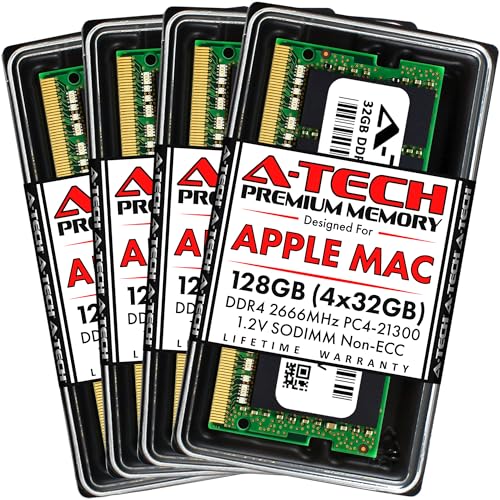
Popular kits for local AI
In-stock value picks at the capacities most local LLM builds actually buy.
Disclosure: As an Amazon Associate I earn from qualifying purchases. Rankings use price and spec data only — not paid placement. How we rank products



Showing 108 of 108 open-weights models
Kimi K3 (2.8T MoE)
Moonshot's open 2.8T-parameter frontier MoE with native vision and a 1M-token context. Official blog: activates 16 of 896 experts (Stable LatentMoE); API live now; full weights expected by July 27, 2026. Active params (~50B) estimated as 2800×16/896 until the technical report publishes an exact figure. RAM sizing uses total parameters for weight footprint.
DeepSeek-V4-Pro (1.6T MoE)
Flagship open reasoning MoE: 1.6T total / 49B active with Compressed Sparse Attention for long-context efficiency. RAM estimates assume GGUF-style quantization; native FP4/FP8 footprints can differ.
Kimi K2 0905 (1T MoE)
Kimi K2 0905 checkpoint: 1T MoE with 32B active parameters and extended 256K context.
Kimi K2 (1T MoE)
Original Kimi K2 open-weight MoE: ~1T total parameters with 32B activated per token. Foundation for the later K2.5 / K2.6 / K2.7-Code family.
Kimi K2 Thinking (1T MoE)
Kimi K2 Thinking reasoning variant on the K2 MoE stack: 1T total / 32B active with long-horizon agentic reasoning.
Kimi K2.5 (1T MoE)
Moonshot multimodal MoE: 1T total / 32B active (384 experts, 8 selected + 1 shared), 256K context, MoonViT vision encoder. Open weights on Hugging Face.
Kimi K2.6 (1T MoE)
Kimi K2.6 agentic coding and planning flagship: 1T MoE with 32B active parameters and 256K context.
Kimi K2.7 Code (1T MoE)
Coding-focused Kimi K2.7 open-weight MoE (1T / 32B active, 256K context). Tuned for long-horizon software engineering with ~30% fewer thinking tokens vs K2.6.
GLM-5.2 (744B MoE)
Z.ai / Zhipu flagship open-weight MoE (744B-A40B) with 1M context and IndexShare sparse attention. MIT license; optimized for long-horizon agentic coding.
GLM-5 (744B MoE)
Zhipu AI open-weights MoE flagship (744B total / 40B active). Strong general reasoning and multi-turn planning under MIT license.
DeepSeek V3 0324
DeepSeek V3, a 685B-parameter, mixture-of-experts model, is the latest iteration of the flagship chat model family from the DeepSeek team. It succeeds the [DeepSeek V3](/deepseek/deepseek-chat-v3) model and performs really well...
DeepSeek V3.1
DeepSeek-V3.1 is a large hybrid reasoning model (671B parameters, 37B active) that supports both thinking and non-thinking modes via prompt templates. It extends the DeepSeek-V3 base with a two-phase long-context...
DeepSeek-R1-0528 (671B MoE)
May 2025 DeepSeek-R1 refresh: same 671B MoE / 37B active architecture with updated post-training.
DeepSeek-R1 (671B MoE)
DeepSeek-R1 reasoning MoE built on DeepSeek-V3: 671B total / 37B activated per token, 128K context. Open weights on Hugging Face.
DeepSeek V3 (671B MoE)
DeepSeek's premier 671B total / 37B active parameter Mixture-of-Experts (MoE) open reasoning model featuring Multi-head Latent Attention (MLA).
Qwen3 Coder 480B A35B
Qwen3-Coder-480B-A35B-Instruct is a Mixture-of-Experts (MoE) code generation model developed by the Qwen team. It is optimized for agentic coding tasks such as function calling, tool use, and long-context reasoning over...
MiniMax-01
MiniMax-01 is a combines MiniMax-Text-01 for text generation and MiniMax-VL-01 for image understanding. It has 456 billion parameters, with 45.9 billion parameters activated per inference, and can handle a context...
MiniMax-M3 (428B MoE)
Native multimodal MiniMax MoE: ~428B total / ~23B active, 1M context, MiniMax Sparse Attention (MSA). Open weights on Hugging Face.
Hermes 4 405B
Hermes 4 is a large-scale reasoning model built on Meta-Llama-3.1-405B and released by Nous Research. It introduces a hybrid reasoning mode, where the model can choose to deliberate internally with...
Hermes 3 405B Instruct
Hermes 3 is a generalist language model with many improvements over Hermes 2, including advanced agentic capabilities, much better roleplaying, reasoning, multi-turn conversation, long context coherence, and improvements across the...
Llama 3.1 405B Instruct
Meta's premier 405 Billion parameter flagship dense open-weight model. Requires multi-GPU node or Mac Studio 192GB Unified Memory setup for local execution.
Llama 4 Maverick (400B MoE)
Meta Llama 4 Maverick open-weight MoE: 400B total / 17B active with long-context multimodal capability.
Qwen3.5 397B A17B
The Qwen3.5 series 397B-A17B native vision-language model is built on a hybrid architecture that integrates a linear attention mechanism with a sparse mixture-of-experts model, achieving higher inference efficiency. It delivers...
DeepSeek-V4-Flash (284B MoE)
High-efficiency DeepSeek-V4 MoE variant: 284B total / 13B active with 1M context for lower-latency local inference.
Qwen3 VL 235B A22B Thinking
Qwen3-VL-235B-A22B Thinking is a multimodal model that unifies strong text generation with visual understanding across images and video. The Thinking model is optimized for multimodal reasoning in STEM and math....
Qwen3 VL 235B A22B Instruct
Qwen3-VL-235B-A22B Instruct is an open-weight multimodal model that unifies strong text generation with visual understanding across images and video. The Instruct model targets general vision-language use (VQA, document parsing, chart/table...
Qwen3 235B A22B Thinking 2507
Qwen3-235B-A22B-Thinking-2507 is a high-performance, open-weight Mixture-of-Experts (MoE) language model optimized for complex reasoning tasks. It activates 22B of its 235B parameters per forward pass and natively supports up to 262,144...
Qwen3 235B A22B Instruct 2507
Qwen3-235B-A22B-Instruct-2507 is a multilingual, instruction-tuned mixture-of-experts language model based on the Qwen3-235B architecture, with 22B active parameters per forward pass. It is optimized for general-purpose text generation, including instruction following,...
Qwen3 235B A22B
Qwen3-235B-A22B is a 235B parameter mixture-of-experts (MoE) model developed by Qwen, activating 22B parameters per forward pass. It supports seamless switching between a "thinking" mode for complex reasoning, math, and...
Mixtral 8x22B Instruct
Mistral's official instruct fine-tuned version of [Mixtral 8x22B](/models/mistralai/mixtral-8x22b). It uses 39B active parameters out of 141B, offering unparalleled cost efficiency for its size. Its strengths include: - strong math, coding,...
WizardLM-2 8x22B
WizardLM-2 8x22B is Microsoft AI's most advanced Wizard model. It demonstrates highly competitive performance compared to leading proprietary models, and it consistently outperforms all existing state-of-the-art opensource models. It is...
Mistral Medium 3.5
Mistral Medium 3.5 is a dense 128B instruction-following model from Mistral AI. It supports text and image inputs with text output, and is designed for agentic workflows, coding, and complex...
Devstral 2 2512
Devstral 2 is a state-of-the-art open-source model by Mistral AI specializing in agentic coding. It is a 123B-parameter dense transformer model supporting a 256K context window. Devstral 2 supports exploring...
Mistral Large 2 (123B)
Mistral AI's premier 123B parameter flagship dense model built for advanced multilingual reasoning and large-codebase analysis.
Qwen3.5-122B-A10B
The Qwen3.5 122B-A10B native vision-language model is built on a hybrid architecture that integrates a linear attention mechanism with a sparse mixture-of-experts model, achieving higher inference efficiency. In terms of...
Mistral Small 4 (119B MoE)
Mistral Small 4 production MoE unifying instruction following, multimodal inputs, and agentic workflows with a low active footprint.
Command A
Command A is an open-weights 111B parameter model with a 256k context window focused on delivering great performance across agentic, multilingual, and coding use cases. Compared to other leading proprietary...
Llama 4 Scout (109B MoE)
Meta Llama 4 Scout: 109B MoE / 17B active with a native 10M-token context window for long-document workloads.
Command R+ (104B)
Cohere's flagship 104 Billion parameter open model optimized for complex enterprise RAG workflows and multi-step tool use.
Qwen3.8 2.4T A95B
Qwen3.8 2.4T A95B is an open-weight sparse mixture-of-experts model from Qwen and the open-weight variant of [Qwen3.8 Max](/qwen/qwen3.8-max), with 95 billion active parameters out of 2.4 trillion total. It is...
Qwen3 Coder Next
Qwen3-Coder-Next is an open-weight causal language model optimized for coding agents and local development workflows. It uses a sparse MoE design with 80B total parameters and only 3B activated per...
Qwen3 Next 80B A3B Thinking
Qwen3-Next-80B-A3B-Thinking is a reasoning-first chat model in the Qwen3-Next line that outputs structured “thinking” traces by default. It’s designed for hard multi-step problems; math proofs, code synthesis/debugging, logic, and agentic...
Qwen3 Next 80B A3B Instruct
Qwen3-Next-80B-A3B-Instruct is an instruction-tuned chat model in the Qwen3-Next series optimized for fast, stable responses without “thinking” traces. It targets complex tasks across reasoning, code generation, knowledge QA, and multilingual...
Qwen2.5 VL 72B Instruct
Qwen2.5-VL is proficient in recognizing common objects such as flowers, birds, fish, and insects. It is also highly capable of analyzing texts, charts, icons, graphics, and layouts within images.
Qwen2.5 72B Instruct
Qwen2.5 72B is the latest series of Qwen large language models. Qwen2.5 brings the following improvements upon Qwen2: - Significantly more knowledge and has greatly improved capabilities in coding and...
Qwen 2.5 Math 72B
Alibaba's specialized 72B mathematical reasoning model supporting chain-of-thought and Python code execution for quantitative math.
R1 Distill Llama 70B
DeepSeek R1 Distill Llama 70B is a distilled large language model based on [Llama-3.3-70B-Instruct](/meta-llama/llama-3.3-70b-instruct), using outputs from [DeepSeek R1](/deepseek/deepseek-r1). The model combines advanced distillation techniques to achieve high performance across...
Llama 3.3 70B Instruct
The Meta Llama 3.3 multilingual large language model (LLM) is a pretrained and instruction tuned generative model in 70B (text in/text out). The Llama 3.3 instruction tuned text only model...
Hermes 3 70B Instruct
Hermes 3 is a generalist language model with many improvements over [Hermes 2](/models/nousresearch/nous-hermes-2-mistral-7b-dpo), including advanced agentic capabilities, much better roleplaying, reasoning, multi-turn conversation, long context coherence, and improvements across the...
Llama 3.1 70B Instruct
Meta's latest class of model (Llama 3.1) launched with a variety of sizes & flavors. This 70B instruct-tuned version is optimized for high quality dialogue usecases. It has demonstrated strong...
Mistral Large 3 2512
Mistral Large 3 2512 is Mistral’s most capable model to date, featuring a sparse mixture-of-experts architecture with 41B active parameters (675B total), and released under the Apache 2.0 license.
Qwen3.6 35B A3B
Qwen3.6-35B-A3B is an open-weight multimodal model from Alibaba Cloud with 35 billion total parameters and 3 billion active parameters per token. It uses a hybrid sparse mixture-of-experts architecture combining Gated...
Qwen3.5-35B-A3B
The Qwen3.5 Series 35B-A3B is a native vision-language model designed with a hybrid architecture that integrates linear attention mechanisms and a sparse mixture-of-experts model, achieving higher inference efficiency. Its overall...
Qwen 3.6 35B-A3B (MoE)
Qwen 3.6 sparse MoE activating 3B parameters per token for efficient coding throughput.
Yi 1.5 34B
01.AI's upgraded 34B dense open model delivering state-of-the-art coding and math capabilities in its class.
Qwen3 VL 32B Instruct
Qwen3-VL-32B-Instruct is a large-scale multimodal vision-language model designed for high-precision understanding and reasoning across text, images, and video. With 32 billion parameters, it combines deep visual perception with advanced text...
Qwen3 32B
Qwen3-32B is a dense 32.8B parameter causal language model from the Qwen3 series, optimized for both complex reasoning and efficient dialogue. It supports seamless switching between a "thinking" mode for...
Qwen2.5 Coder 32B Instruct
Qwen2.5-Coder is the latest series of Code-Specific Qwen large language models (formerly known as CodeQwen). Qwen2.5-Coder brings the following improvements upon CodeQwen1.5: - Significantly improvements in **code generation**, **code reasoning**...
Gemma 4 31B
Gemma 4 31B Instruct is Google DeepMind's 30.7B dense multimodal model supporting text and image input with text output. Features a 256K token context window, configurable thinking/reasoning mode, native function...
Gemma 4 31B (Dense)
Google DeepMind Gemma 4 31B dense flagship for single-GPU / high-RAM consumer local inference.
North Mini Code (free)
North Mini Code is Cohere's first agentic coding model and the debut of its North family. A sparse mixture-of-experts model with 30B total parameters and 3B active, it is optimized...
Qwen3 VL 30B A3B Thinking
Qwen3-VL-30B-A3B-Thinking is a multimodal model that unifies strong text generation with visual understanding for images and videos. Its Thinking variant enhances reasoning in STEM, math, and complex tasks. It excels...
Qwen3 VL 30B A3B Instruct
Qwen3-VL-30B-A3B-Instruct is a multimodal model that unifies strong text generation with visual understanding for images and videos. Its Instruct variant optimizes instruction-following for general multimodal tasks. It excels in perception...
Qwen3 30B A3B Thinking 2507
Qwen3-30B-A3B-Thinking-2507 is a 30B parameter Mixture-of-Experts reasoning model optimized for complex tasks requiring extended multi-step thinking. The model is designed specifically for “thinking mode,” where internal reasoning traces are separated...
Qwen3 Coder 30B A3B Instruct
Qwen3-Coder-30B-A3B-Instruct is a 30.5B parameter Mixture-of-Experts (MoE) model with 128 experts (8 active per forward pass), designed for advanced code generation, repository-scale understanding, and agentic tool use. Built on the...
Qwen3 30B A3B Instruct 2507
Qwen3-30B-A3B-Instruct-2507 is a 30.5B-parameter mixture-of-experts language model from Qwen, with 3.3B active parameters per inference. It operates in non-thinking mode and is designed for high-quality instruction following, multilingual understanding, and...
Qwen3 30B A3B
Qwen3, the latest generation in the Qwen large language model series, features both dense and mixture-of-experts (MoE) architectures to excel in reasoning, multilingual support, and advanced agent tasks. Its unique...
Qwen3.8 27B
Qwen3.8 27B is an open-weight dense vision-language model from Qwen. It is suited for coding, professional workflows, research, multimodal interaction, and long-running agent tasks, with flexible thinking that can be...
Qwen3.6 27B
Qwen3.6 27B is a dense 27-billion-parameter language model from the Qwen Team at Alibaba, released in April 2026. It features hybrid multimodal capabilities — accepting text, image, and video inputs...
Qwen3.5-27B
The Qwen3.5 27B native vision-language Dense model incorporates a linear attention mechanism, delivering fast response times while balancing inference speed and performance. Its overall capabilities are comparable to those of...
Gemma 3 27B
Gemma 3 introduces multimodality, supporting vision-language input and text outputs. It handles context windows up to 128k tokens, understands over 140 languages, and offers improved math, reasoning, and chat capabilities,...
Gemma 2 27B
Gemma 2 27B by Google is an open model built from the same research and technology used to create the [Gemini models](/models?q=gemini). Gemma models are well-suited for a variety of...
Qwen 3.6 27B (Dense)
Alibaba Qwen 3.6 dense 27B developer flagship for multilingual reasoning and structured local workflows.
Gemma 4 26B A4B
Gemma 4 26B A4B IT is an instruction-tuned Mixture-of-Experts (MoE) model from Google DeepMind. Despite 25.2B total parameters, only 3.8B activate per token during inference — delivering near-31B quality at...
Gemma 4 26B (MoE)
Ultra-efficient Gemma 4 sparse MoE activating ~3.8B parameters per token for fast local inference.
Voxtral Small 24B 2507
Voxtral Small is an enhancement of Mistral Small 3, incorporating state-of-the-art audio input capabilities while retaining best-in-class text performance. It excels at speech transcription, translation and audio understanding. Input audio...
Uncensored
Venice Uncensored Dolphin Mistral 24B Venice Edition is a fine-tuned variant of Mistral-Small-24B-Instruct-2501, developed by dphn.ai in collaboration with Venice.ai. This model is designed as an “uncensored” instruct-tuned LLM, preserving...
Mistral Small 3.2 24B
Mistral-Small-3.2-24B-Instruct-2506 is an updated 24B parameter model from Mistral optimized for instruction following, repetition reduction, and improved function calling. Compared to the 3.1 release, version 3.2 significantly improves accuracy on...
Mistral Small 3.1 24B
Mistral Small 3.1 24B Instruct is an upgraded variant of Mistral Small 3 (2501), featuring 24 billion parameters with advanced multimodal capabilities. It provides state-of-the-art performance in text-based reasoning and...
Saba
Mistral Saba is a 24B-parameter language model specifically designed for the Middle East and South Asia, delivering accurate and contextually relevant responses while maintaining efficient performance. Trained on curated regional...
Mistral Small 3
Mistral Small 3 is a 24B-parameter language model optimized for low-latency performance across common AI tasks. Released under the Apache 2.0 license, it features both pre-trained and instruction-tuned versions designed...
Codestral 22B
Mistral AI's specialized 22B code generation model trained across 80+ programming languages. Fits on single 24GB GPUs (RTX 3090/4090).
StarCoder2 15B
BigCode & ServiceNow's premier open 15B code LLM trained on 600+ languages with full dataset transparency. Fits 100% in 16GB VRAM GPUs.
Ministral 3 14B 2512
The largest model in the Ministral 3 family, Ministral 3 14B offers frontier capabilities and performance comparable to its larger Mistral Small 3.2 24B counterpart. A powerful and efficient language...
Qwen3 14B
Qwen3-14B is a dense 14.8B parameter causal language model from the Qwen3 series, designed for both complex reasoning and efficient dialogue. It supports seamless switching between a "thinking" mode for...
Phi 4
[Microsoft Research](/microsoft) Phi-4 is designed to perform well in complex reasoning tasks and can operate efficiently in situations with limited memory or where quick responses are needed. At 14 billion...
DeepSeek V4 Flash 0731
DeepSeek V4 Flash 0731 is a sparse mixture-of-experts model from DeepSeek, with 13B active parameters out of 284B total. This re-post-trained revision is suited for coding, reasoning, and agent workflows....
Llama Guard 4 12B
Llama Guard 4 is a Llama 4 Scout-derived multimodal pretrained model, fine-tuned for content safety classification. Similar to previous versions, it can be used to classify content in both LLM...
Gemma 3 12B
Gemma 3 introduces multimodality, supporting vision-language input and text outputs. It handles context windows up to 128k tokens, understands over 140 languages, and offers improved math, reasoning, and chat capabilities,...
Mistral Nemo
A 12B parameter model with a 128k token context length built by Mistral in collaboration with NVIDIA. The model is multilingual, supporting English, French, German, Spanish, Italian, Portuguese, Chinese, Japanese,...
MiniMax M2.1
MiniMax-M2.1 is a lightweight, state-of-the-art large language model optimized for coding, agentic workflows, and modern application development. With only 10 billion activated parameters, it delivers a major jump in real-world...
MiniMax M2
MiniMax-M2 is a compact, high-efficiency large language model optimized for end-to-end coding and agentic workflows. With 10 billion activated parameters (230 billion total), it delivers near-frontier intelligence across general reasoning,...
Qwen3.5-9B
Qwen3.5-9B is a multimodal foundation model from the Qwen3.5 family, designed to deliver strong reasoning, coding, and visual understanding in an efficient 9B-parameter architecture. It uses a unified vision-language design...
DeepSeek V4.1 Flash
DeepSeek V4.1 Flash is a sparse mixture-of-experts model from DeepSeek, and the first built on the company's Causal Encoder-Decoder (CED) architecture. It activates 8B parameters on input and 16B on...
Ministral 3 8B 2512
A balanced model in the Ministral 3 family, Ministral 3 8B is a powerful, efficient tiny language model with vision capabilities.
Qwen3 VL 8B Thinking
Qwen3-VL-8B-Thinking is the reasoning-optimized variant of the Qwen3-VL-8B multimodal model, designed for advanced visual and textual reasoning across complex scenes, documents, and temporal sequences. It integrates enhanced multimodal alignment and...
Qwen3 VL 8B Instruct
Qwen3-VL-8B-Instruct is a multimodal vision-language model from the Qwen3-VL series, built for high-fidelity understanding and reasoning across text, images, and video. It features improved multimodal fusion with Interleaved-MRoPE for long-horizon...
Qwen3 8B
Qwen3-8B is a dense 8.2B parameter causal language model from the Qwen3 series, designed for both reasoning-heavy tasks and efficient dialogue. It supports seamless switching between "thinking" mode for math,...
Llama 3.1 8B Instruct
Meta's latest class of model (Llama 3.1) launched with a variety of sizes & flavors. This 8B instruct-tuned version is fast and efficient. It has demonstrated strong performance compared to...
Command R7B (12-2024)
Command R7B (12-2024) is a small, fast update of the Command R+ model, delivered in December 2024. It excels at RAG, tool use, agents, and similar tasks requiring complex reasoning...
Qwen2.5 7B Instruct
Qwen2.5 7B is the latest series of Qwen large language models. Qwen2.5 brings the following improvements upon Qwen2: - Significantly more knowledge and has greatly improved capabilities in coding and...
Gemma 3 4B
Gemma 3 introduces multimodality, supporting vision-language input and text outputs. It handles context windows up to 128k tokens, understands over 140 languages, and offers improved math, reasoning, and chat capabilities,...
Phi-4-mini (3.8B)
Microsoft Phi-4-mini dense model for fast on-device and low-RAM local text processing.
Phi 3.5 Mini (3.8B)
Microsoft's high-efficiency 3.8B parameter lightweight model with 128K context. Runs locally on budget GPUs or low-power laptops.
Ministral 3 3B 2512
The smallest model in the Ministral 3 family, Ministral 3 3B is a powerful, efficient tiny language model with vision capabilities.
Llama 3.2 3B Instruct
Llama 3.2 3B is a 3-billion-parameter multilingual large language model, optimized for advanced natural language processing tasks like dialogue generation, reasoning, and summarization. Designed with the latest transformer architecture, it...
SmolLM2 1.7B
Hugging Face's compact 1.7B parameter edge model designed for local on-device deployment with minimal memory consumption.
Llama 3.2 1B Instruct
Llama 3.2 1B is a 1-billion-parameter language model focused on efficiently performing natural language tasks, such as summarization, dialogue, and multilingual text analysis. Its smaller size allows it to operate...
Understanding Local AI Memory Requirements
Model Weights Size
The parameters of the model determine its baseline RAM/VRAM footprint. Every billion parameters requires 2GB in standard 16-bit float (`FP16`). Quantizing parameters to 4-bit (`Q4_K_M`) compresses this to ~0.56GB per billion, trading a tiny fraction of accuracy for a 72% memory savings.
Context Window KV Cache
As the context window scales, the key-value cache (KV cache) expands. Running massive 1M token windows (like DeepSeek V4) requires enormous RAM allocations strictly for context memory. Our calculators use model-specific parameters to compute this dynamically.
Memory Bandwidth Sizing
Because local LLM generation requires loading weights from RAM on every single step, generation speeds scale directly with memory bandwidth. Mainstream DDR5 configurations yield far superior tokens/s compared to DDR4, making memory frequency critical for local AI speed.
Frequently Asked Questions
How do you calculate RAM size for a local LLM?
The physical RAM requirement is the sum of three components: 1. **Model Weights Size**: calculated as `(Parameter Count * Bits per Weight) / 8` (MoE architectures require the total parameter weights loaded, even if only a subset are active per token). 2. **Context KV Cache Size**: determined by active parameters and target context length (models utilizing Grouped-Query Attention drastically reduce this footprint). 3. **OS Overhead**: typically 6GB to 12GB allocation depending on workstation or multi-GPU configurations.
Why do Mixture-of-Experts (MoE) models require so much RAM?
While Mixture-of-Experts models (like DeepSeek V4 or Llama 4 Maverick) only activate a small number of parameters per token during calculation (which keeps compute costs low), **the entire weights database of all experts must reside in physical RAM/VRAM** for fast expert switching during inference. Therefore, RAM sizing calculations must target the *total* parameters rather than just the *active* ones.
Can I run a 70B model on 32GB of RAM?
Not at full unquantized 16-bit weight precision (which requires ~140GB). However, you can run a 70B model at 4-bit quantization (e.g., `Q4_K_M`) which compresses weights down to ~39GB. When factoring in system overhead and context, a **64GB system memory kit** is required to run a 4-bit 70B model stably without out-of-memory crashes.
What is the speed bottleneck for running local LLMs on CPU/RAM?
The primary bottleneck is **system memory bandwidth**, not CPU cores. Large language models are highly memory-bandwidth bound. A typical dual-channel DDR5-6000 configuration achieves ~96 GB/s, generating tokens at around 2.4 tokens/s for a 40GB model. Upgrading to high-speed dual-channel CUDIMM (DDR5-8400 yields ~134 GB/s) or quad-channel workstation layouts is the best way to directly scale local inference speeds.