

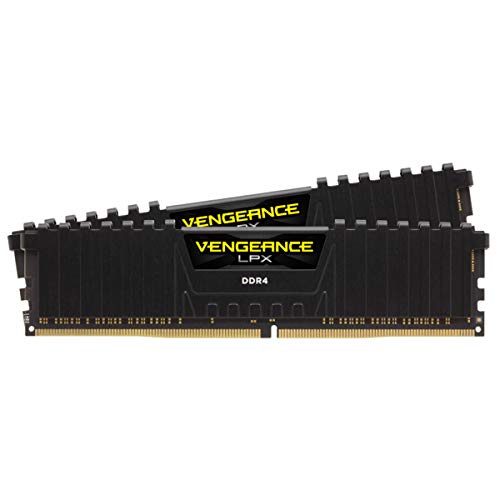


Bottom line: For most gamers in 2026, buy 32GB (2×16GB) at your platform sweet spot — DDR5-6000 CL30 EXPO on AM5, DDR4-3600 CL16 on AM4, or DDR5-6000–6400 XMP on Intel — then enable the profile and test stability. Capacity and two-stick stability beat extreme frequency.
Use the live kits above for buyable dual-stick options ranked by value. Compare DDR5-6000 CL30, DDR4-3600 CL16, DDR5-6400, or best RAM deals.
Quick platform picker
| Your CPU | Buy this | Why |
|---|---|---|
| AMD Ryzen 9000 / 7000 (AM5) | DDR5-6000 CL30 EXPO | UCLK:MCLK 1:1 sweet spot |
| AMD Ryzen X3D (7800X3D, 9800X3D) | DDR5-6000 CL30 EXPO | V-Cache masks latency; do not overspend on speed |
| Intel Core Ultra 200S (Arrow Lake) | DDR5-6000 to DDR5-6400 UDIMM | Practical gaming band; 7200-class often means CUDIMM |
| Intel 12th–14th gen (LGA 1700) | DDR5-5600 to DDR5-6000 | Check board QVL; capacity first |
| AMD Ryzen 5000 (AM4) | DDR4-3600 CL16 | Infinity Fabric sweet spot for Zen 3 |
| Intel 10th–12th gen (DDR4 boards) | DDR4-3200–3600 CL16 | Best value for legacy platforms |
CPU-specific paths: 9800X3D · 7800X3D · 9600X · 5700X3D · Core Ultra 285K · 265K · 14700K · AM5 · AM4. Speed value checks: Is 7200 worth it? · Is 8000 worth it? · CL30 vs CL28.
Why 32GB is the gaming baseline
Modern mid-range GPUs often ship with limited VRAM. Demanding titles can spill texture and frame data into system RAM when VRAM fills. On a 16GB system, that spillover plus Discord, launchers, and a browser can push Windows into page-file use — average FPS may look fine while 1% lows and frame pacing suffer.
32GB absorbs that headroom for games, voice chat, and normal background apps. Independent platform testing and vendor guidance in 2026 treat 32GB as the practical gaming floor for new builds.
16GB is only viable if you are on a hard budget, close background apps before gaming, and accept that newer titles will push an upgrade sooner.
Prefer 2×16GB over 2×8GB when buying 32GB: denser modules usually behave better for dual-channel gaming kits at the same speed.
Market context (verify live prices)
Consumer DDR5 supply has been tight as DRAM makers allocate wafers toward AI and HBM demand. Legacy DDR4 wafer allocation has also shrunk. Treat any fixed dollar quote or “up X%” claim as outdated — verify current $/GB on DDR5 prices, why RAM prices are high, and best deals.
If you need RAM for a current build, buy a compatible value-tier kit now rather than waiting for a speculative crash.
Platform speed guide
AMD AM5 (Ryzen 7000 / 9000)
Zen 4 and Zen 5 perform best when memory data clock (MCLK) stays in a 1:1 ratio with the memory controller clock (UCLK). At DDR5-6000, both sit near 3000 MHz. Pushing much higher often drops UCLK into 2:1, which can erase the bandwidth gain.
Sweet spot: DDR5-6000 CL30 EXPO. Full platform detail: Best RAM for AM5.
Long training boots are common on AM5 — use the AM5 slow-boot guide before replacing hardware.
X3D note: Large 3D V-Cache reduces how often games hit system RAM. Buy a stable 6000 CL30 kit; do not pay a large premium for 7200–8000 for pure gaming.
Intel Core Ultra 200S (LGA 1851)
Arrow Lake scales with bandwidth more gracefully than AMD’s UCLK:MCLK lock. Official higher ratings (for example 7200-class) often apply to CUDIMM, not every ordinary UDIMM. For gaming UDIMMs, DDR5-6000 to DDR5-6400 is the practical band. See Core Ultra 285K and the CUDIMM guide only if you are deliberately chasing extreme bins.
Legacy DDR4 (AM4, older Intel)
A well-tuned DDR4-3600 CL16 kit still delivers strong gaming performance on AM4. Compare live $/GB against DDR5 before assuming DDR4 is always cheaper — scarcity can flip the value calculation. See Best RAM for AM4.
True latency (compare kits fairly)
CAS labels alone mislead across generations. Use:
True latency (ns) = (CL ÷ Transfer Rate in MT/s) × 2000
| Kit | True latency | Gaming interpretation |
|---|---|---|
| DDR4-3600 CL16 | 8.9 ns | Best DDR4 gaming target |
| DDR4-3600 CL18 | 10.0 ns | Weaker value than CL16 |
| DDR5-5600 CL36 | 12.9 ns | Often a poor latency deal |
| DDR5-6000 CL30 | 10.0 ns | AMD / mainstream sweet spot |
| DDR5-6400 CL32 | 10.0 ns | Sensible Intel mainstream |
| DDR5-7200 CL34 | 9.4 ns | Pay only with QVL + budget headroom |
Use the RAM latency calculator and price-per-GB calculator on live listings. Avoid poorly timed JEDEC-baseline kits sold as “fast” when the CAS is extremely loose.
Capacity guide
| Configuration | Who it is for | Notes |
|---|---|---|
| 16GB (2×8GB) | Bare minimum | Budget only; expect upgrades sooner |
| 32GB (2×16GB) | Default 2026 gaming kit | Games + Discord + browser |
| 48GB (2×24GB) | Gaming + stream / light edit | See best 48GB DDR5 |
| 64GB (2×32GB) | Prosumer / heavy multitasking | Overkill for games alone — best 64GB DDR5 |
Two sticks beat four. Filling all DIMM slots often forces lower stable DDR5 speeds. Prefer 2×32GB over 4×16GB. Details: Four-Stick DDR5 Stability.
Worked example: gaming + OBS + browser
Measured scenario for sizing (replace with your own Task Manager peak):
- 1Game + Discord + Chrome (~30 tabs) + OBS streaming at 1080p → sustained committed memory ~28–34GB
- 2Add 20% headroom → ~34–41GB
- 3Buy 48GB (2×24GB) if that peak is typical; stay on 32GB if peaks stay under ~26GB with headroom
Do not buy 64GB for FPS alone. Buy it when VMs, local AI, or creator apps already exceed 32GB — then see How Much RAM Do I Need?.
CUDIMM, CAMM2, and DDR6 (short)
- CUDIMM: Useful for extreme Intel bins; usually not worth a large premium for everyday FPS. Full detail: CUDIMM guide.
- CAMM2 / LPCAMM2: Laptop / niche desktop form factors — see LPCAMM2 guide. Standard UDIMMs remain the desktop gaming default.
- DDR6: Not a purchasable mainstream desktop option in 2026. Build on DDR5 today; see DDR5 vs DDR6.
Buying checklist
- 1Confirm DDR4 vs DDR5 from the motherboard manual.
- 2Buy one matched two-stick kit — do not mix batches.
- 3Check the full kit part number on the board QVL.
- 4Update BIOS, then enable XMP (Intel) or EXPO (AMD).
- 5Stress-test before the return window closes — How to Test RAM Health.
- 6Verify the CL variant on the listing (CL30 vs CL36 can share a product family name).
- 7Prefer live $/GB over RGB or brand hype.
Enable profiles with the XMP and EXPO BIOS guide.