#1 best $/GB$4.63/GB
Simmtec Incorporated Memory is Our Business
Simmtec RAM 16GB DDR4 2666MHz SODIMM PC4-21300 (PC4-2666V) CL19 1.2V Non-ECC SO-DIMM 260 PinLaptop, Notebook & AIO Computer Memory Upgrade ModuleDDR416GB2666MHz
$74.00
In stock
Compare 1,260 laptop SO-DIMM modules — confirm slots and DDR generation, then rank by $/GB.
Reviewed by C.R. Vinoth Kumar, Founder & Developer · LinkedIn
Typical $/GB
$7.87/GB
Typical kit
$132.48
Modules
1,260
Today's typical Laptop RAM Prices price is $7.87/GB across 1,260 tracked modules. Prices are up 0.0% vs 30 days ago. Current pricing sits at the 50th percentile of the past year.
Know your system? RAM Finder · Motherboard QVL · Compatibility checker
Bottom line
Confirm upgradeable SO-DIMM (not soldered LPDDR) and DDR4 vs DDR5 first. Prefer matching an existing stick or a dual-stick kit — 16GB is the common step-up; 32GB for creators and heavy multitasking. Across 1,260 tracked laptop modules, the average is $7.87/GB. Skip desktop DIMMs and LPCAMM2/CAMM2 unless your model uses them.
Buy this today
Confirm these before shopping SO-DIMM below.
Skip if RAM is soldered, you need desktop DIMMs (use desktop prices), or your laptop uses LPCAMM2/CAMM2. Already sized the upgrade? Go to Best 16GB Laptop or Best 32GB Laptop.
| Situation | Buy | Shop |
|---|---|---|
| 8GB → everyday | +16GB or 2×8GB | Best 16GB |
| Creators / heavy use | 32GB total | Best 32GB |
| One free slot | Match gen/speed | Filter DDR4/DDR5 below |
| Hard budget | Cap total price | Under $100 |
Live verified laptop ram prices deals updated daily.
Prices and availability updated dynamically via Amazon Creators API. As an Amazon Associate, RAM Prices earns from qualifying purchases.
Verify on Amazon.com before purchasing — checkout price applies.Lowest $/GB on buyable kits — dual-stick ≥16GB when available
Simmtec Incorporated Memory is Our Business
Simmtec RAM 16GB DDR4 2666MHz SODIMM PC4-21300 (PC4-2666V) CL19 1.2V Non-ECC SO-DIMM 260 PinLaptop, Notebook & AIO Computer Memory Upgrade Module$74.00
In stock
Kingston
Kingston Technology 8GB DDR4 2133MHz SODIMM Memory for Select Acer, Dell, HP/Compaq Laptops (KCP421SD8/8)$39.70
In stock
Crucial
Crucial 16GB, 260-pin SODIMM, DDR4 PC4-21300,$79.99
In stock
Prices updated daily. Product prices and availability are accurate as of the date/time indicated and are subject to change. Any price and availability information displayed on Amazon.com at the time of purchase will apply to the purchase of this product.
Disclosure: As an Amazon Associate I earn from qualifying purchases. Rankings use price and spec data only — not paid placement. How we rank products
Sorted by price per GB — Amazon stock signal preferred
534 listed
Jump to a sweet spot
Filter by Platform
Show only RAM compatible with your system
Intel Desktop
Intel HEDT
AMD Desktop
AMD HEDT
Laptop

In stock

$30.00
$1.88/GB
In stock

$17.99
$2.25/GB
In stock
$35.99
$2.25/GB
In stock

$36.49
$2.28/GB
In stock

In stock

In stock

$73.99
$2.31/GB
In stock

$74.99
$2.34/GB
In stock

$37.88
$2.37/GB
In stock
$37.88
$2.37/GB
In stock

$37.88
$2.37/GB
In stock

In stock

$37.99
$2.37/GB
In stock

In stock

$38.00
$2.38/GB
In stock
$19.00
$2.38/GB
In stock

$38.97
$2.44/GB
In stock

$19.99
$2.50/GB
In stock

$20.99
$2.62/GB
In stock

$20.99
$2.62/GB
In stock

$20.99
$2.62/GB
In stock

$20.99
$2.62/GB
In stock

$20.99
$2.62/GB
In stock

$20.99
$2.62/GB
In stock

$20.99
$2.62/GB
In stock

In stock

In stock

$20.99
$2.62/GB
In stock
$21.33
$2.67/GB
In stock
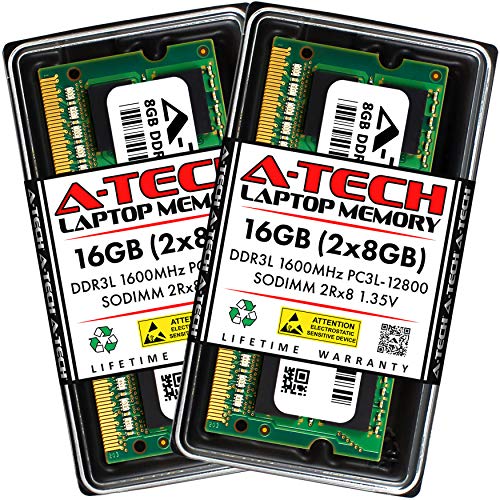
$42.66
$2.67/GB
In stock

$85.32
$2.67/GB
In stock

$43.68
$2.73/GB
In stock

$21.99
$2.75/GB
In stock

In stock

$43.99
$2.75/GB
In stock

$43.99
$2.75/GB
In stock

$43.99
$2.75/GB
In stock

$44.99
$2.81/GB
In stock

$22.88
$2.86/GB
In stock

$45.99
$2.87/GB
In stock

$46.00
$2.88/GB
In stock

$23.50
$2.94/GB
In stock

$23.50
$2.94/GB
In stock

$96.01
$3.00/GB
In stock

$24.50
$3.06/GB
In stock

$49.50
$3.09/GB
In stock
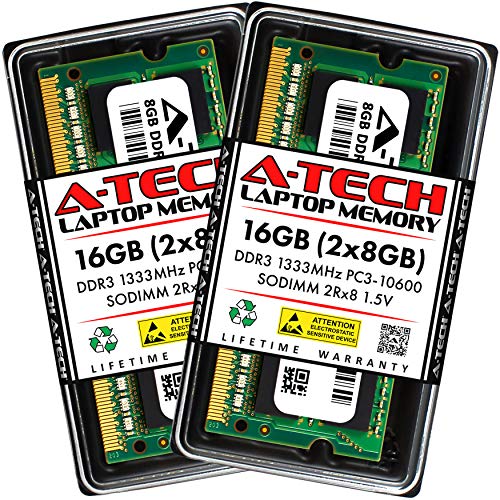
$49.72
$3.11/GB
In stock

$24.99
$3.12/GB
In stock

In stock
Prices updated daily. Product prices and availability are accurate as of the date/time indicated and are subject to change. Any price and availability information displayed on Amazon.com at the time of purchase will apply to the purchase of this product.
Prices updated daily. Product prices and availability are accurate as of the date/time indicated and are subject to change. Any price and availability information displayed on Amazon.com at the time of purchase will apply to the purchase of this product.
Spotted a wrong price or spec? Report a data correction · How we verify data
7d
+0.1%
30d
+0.0%
90d
—
Volatility
0.1%
52w pct
50th
Daily average $/GB — updated every day
How to buy laptop RAM without buying the wrong stick
Buying context, speed tiers, and platform notes
Bottom line: confirm upgradeable SO-DIMM and DDR4 vs DDR5 before you shop — modules here average about $9.08/GB today. Prefer matched dual-channel when you can open both slots. Desktop DIMMs will not fit.
| Check | Look for | Result |
|---|---|---|
| Task Manager → Memory | Slots used: 1 of 2 | Often one free slot — upgrade possible |
| Task Manager → Memory | DDR4 or DDR5 label | Locks generation before you buy |
| Soldered / LPDDR | No slots / “Row of chips” | Skip this page — not SO-DIMM |
| Spec sheet max | Max memory 16 / 32 / 64GB | Confirms upgrade ceiling |
Everyday jump: Best 16GB Laptop RAM. Creators and heavy multitaskers: Best 32GB Laptop RAM. Install help: Laptop RAM Upgrade Guide.
Two matched sticks usually beat one large stick for iGPU and multitasking bandwidth. When adding beside an existing module, match generation first, then speed/CAS when possible.
Open Task Manager → Performance → Memory. “Slots used: 1 of 2” usually means you can add a stick. “2 of 2” may still allow a swap if modules are removable. If memory is soldered LPDDR (form factor “Row of chips” / no slots), do not buy SO-DIMM from this page.
SO-DIMM is the compact laptop / mini-PC form factor. DDR4 SO-DIMM (260-pin) and DDR5 SO-DIMM (262-pin) are physically incompatible. Desktop DIMMs will not fit.
Task Manager → Performance → Memory shows the type, or check the laptop specs page / CPU-Z. Buying the wrong generation will not fit or will not POST. Filter this page by DDR4 or DDR5 once you know.
16GB is the common upgrade from 8GB for browsing, school, and light work. Prefer 32GB for creators, heavy Chrome+apps, or light video. See Best 16GB Laptop RAM and Best 32GB Laptop RAM for ranked modules.
Often yes if generation matches and you have a free slot. Dual-channel with two matched sticks is ideal; mismatched pairs may downclock or run in flex mode. Match speed/CAS when you can.
Those are different form factors — standard SO-DIMM will not work. Do not buy from this page for soldered or LPCAMM2/CAMM2 systems. See /guides/lpcamm2-camm2-laptop-upgrade if your model uses that standard.